When we talk about “anti-inflammatory eating,” it’s tempting to picture a list: turmeric, salmon, blueberries, broccoli — and some magic threshold after which inflammation simply drops. The body doesn’t work that way.
In a previous article, we went into detail about what inflammation actually is, what inflammatory molecules are, and how cancer doesn’t exist as a separate entity in the body but builds connections with everything around it, weaving itself into our own biochemical processes. Today we continue with the question that logically follows: can what’s on your plate change anything in that picture?
In short
- There’s no single “anti-inflammatory food.” There’s an eating pattern — how you eat on most days.
- Fiber, omega-3 fatty acids, polyphenols, and plant diversity act through different, well-described biological pathways.
- Much of this mechanistic evidence comes from the lab, not from treatment trials in people. Nutrition supports treatment — it doesn’t replace it.
- During active treatment, sometimes the most important thing is simply managing to eat at all. That’s why every recipe below comes with an adapted version too.
Basics
What does an anti-inflammatory eating pattern actually mean?
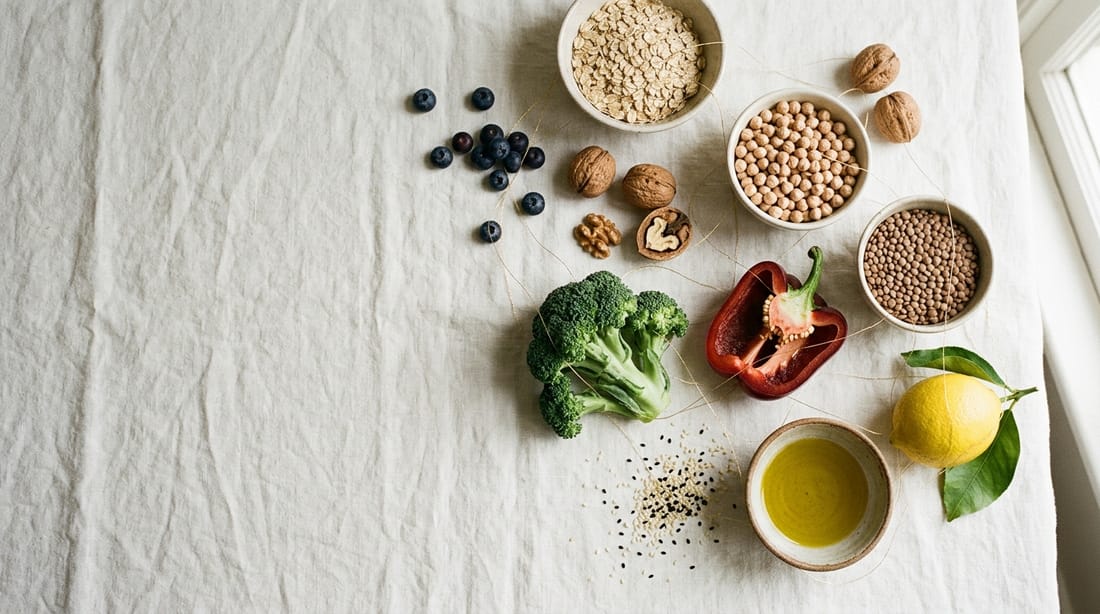
It isn’t about “the ten superfoods from Facebook” or the next supplement — it’s about the architecture of your plate: what’s on it more often, and what’s on it less often.
More often
- vegetables
- fruit
- legumes
- whole grains
- nuts and seeds
- fish
- olive oil
- a variety of plant foods
Less often
- ultra-processed foods
- sugary drinks
- processed meat
- refined grain products
- foods high in added sugar
- excessive red meat
- alcohol
- “detox” products
If you’ve been reading VitaPlena for a while, you’ve probably noticed we pay special attention to fiber, and to how much of it you get. There’s a reason for that — and you’ll see why below.
Four biological pathways from your plate to inflammation
What happens in the body when a certain eating pattern repeats itself over and over? Here are four of the best-described pathways.
Pathway 1
Fiber → microbiota → short-chain fatty acids → gut barrier and immunity
Fiber is a type of carbohydrate our own enzymes can’t fully break down. It’s found only in plant foods — vegetables, fruit, legumes, whole grains, nuts, and seeds.
Part of it passes through the small intestine unchanged and reaches the colon, where it becomes food for gut bacteria. The bacteria ferment it and produce short-chain fatty acids (SCFAs) — mainly acetate, propionate, and butyrate [2]. That’s why it’s more accurate to think of fiber not as “something that helps you go to the bathroom,” but as food for the ecosystem in your gut.
Butyrate is particularly interesting. It’s the main energy source for colon cells, helps maintain the gut barrier, and influences immune cells [2].
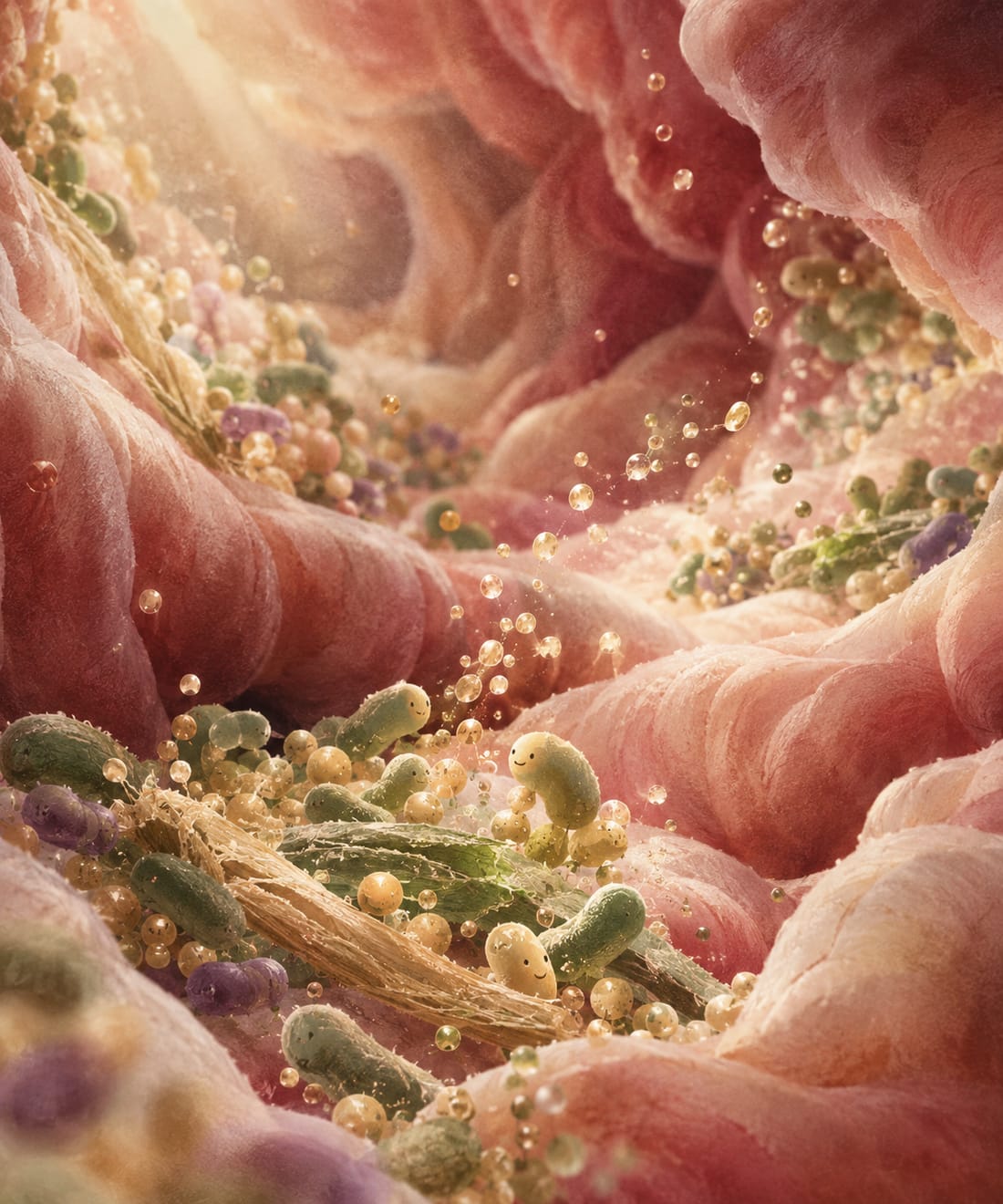
In cancer, this link is interesting because the microbiota and its metabolites interact with the immune environment around the tumor. Much of the mechanistic evidence, though, still comes from preclinical models rather than clinical trials in patients.
🔬 The study that got oncologists looking at the plate
In 2021, a team from MD Anderson Cancer Center and the US National Cancer Institute published data in Science on 128 melanoma patients treated with immunotherapy (immune checkpoint inhibitors) [3]. Patients who consumed at least 20 g of fiber a day had longer progression-free survival. The best outcomes were seen in those who had enough fiber and weren’t taking probiotic supplements.
In mice, the result was mirrored: on a low-fiber diet, or with probiotic use, the response to immunotherapy was weaker, and the tumor contained fewer active cytotoxic T-cells.
Two important caveats. The human study was observational, not randomized, and looked at a single cancer type — so it doesn’t prove that fiber improves treatment. But it’s one of the clearest examples that the chain fiber → microbiota → immunity can matter in real patients too.
Practical takeaway: don’t start or stop a probiotic during treatment without talking to your oncologist.
Pathway 2
Omega-3 → lipid mediators → active resolution of inflammation
We usually think of inflammation as something that just needs to be “switched off.” But the body doesn’t quite work that way. The inflammatory response has a beginning, a course, and an end — resolution. Resolution is an active process, in which tissue gradually returns to balance (homeostasis).
This is where long-chain omega-3 fatty acids come in — EPA and DHA. From them, the body forms so-called specialized pro-resolving mediators (SPMs) — resolvins, protectins, and maresins [4]. They don’t just suppress inflammation; they help it come to an end and let the tissue heal.

This is a rather different concept from the simple “omega-3 is anti-inflammatory.”
And here we need to be careful with language. The fact that a biochemical pathway exists doesn’t mean more salmon will change the outcome of a cancer. Study results on omega-3 in people aren’t consistent. That’s why we treat fatty fish, nuts, and seeds as part of an eating pattern, not as medicine.
There’s one clinical exception worth knowing: ESPEN guidelines allow omega-3 supplements for some patients with advanced cancer on chemotherapy who are losing weight — to support appetite, food intake, and body mass [1]. That, however, is a decision for the care team, not a reason for self-treatment.
Pathway 3
Polyphenols → cell signaling pathways → oxidative stress and inflammation
Polyphenols are a huge family of bioactive compounds found in fruit, vegetables, legumes, nuts, seeds, tea, coffee, and spices.
There’s a myth worth busting here: polyphenol ≠ antioxidant pill. Some polyphenols do directly neutralize reactive oxygen species. But more importantly, they — and the compounds the microbiome turns them into — interact with cell signaling pathways, including ones that regulate inflammation and the activity of various genes.
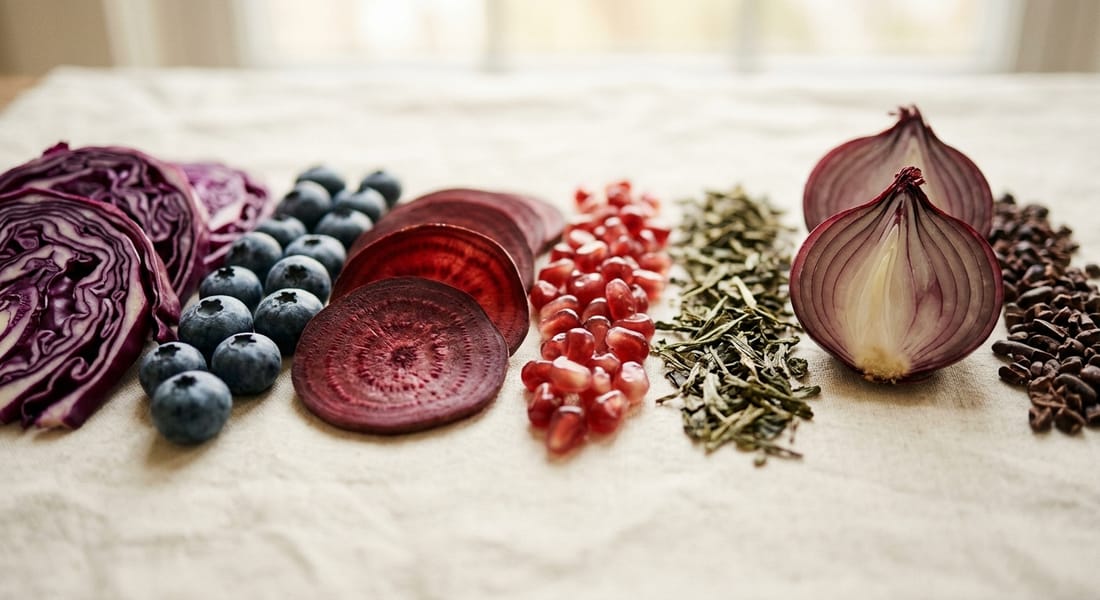
Polyphenols number in the thousands, every food contains a different combination of them, and many are processed by the microbiome. That’s why the effect of a whole food can’t be swapped for “500 mg of its active molecule” — and why we prefer colorful, varied plant foods over chasing individual “superfoods.”
And once again: many of the impressive effects of polyphenols have been shown in cell and experimental models, often at concentrations not reached through normal eating. The mechanism isn’t a proven anti-tumor effect in humans.
Pathway 4
Diversity → different substrates → different microbial functions
Here’s one of the more interesting ideas: maybe the question isn’t just how many vegetables you eat, but how many different plants your microbiome encounters.
Different plants contain different combinations of: various types of fiber, resistant starch, oligosaccharides, polyphenols, organic acids, minerals, and other bioactive compounds. Broccoli, lentils, oats, blueberries, walnuts, and flaxseed aren’t just “another serving of plant food.” Each one delivers different substrates to a complex microbial ecosystem.
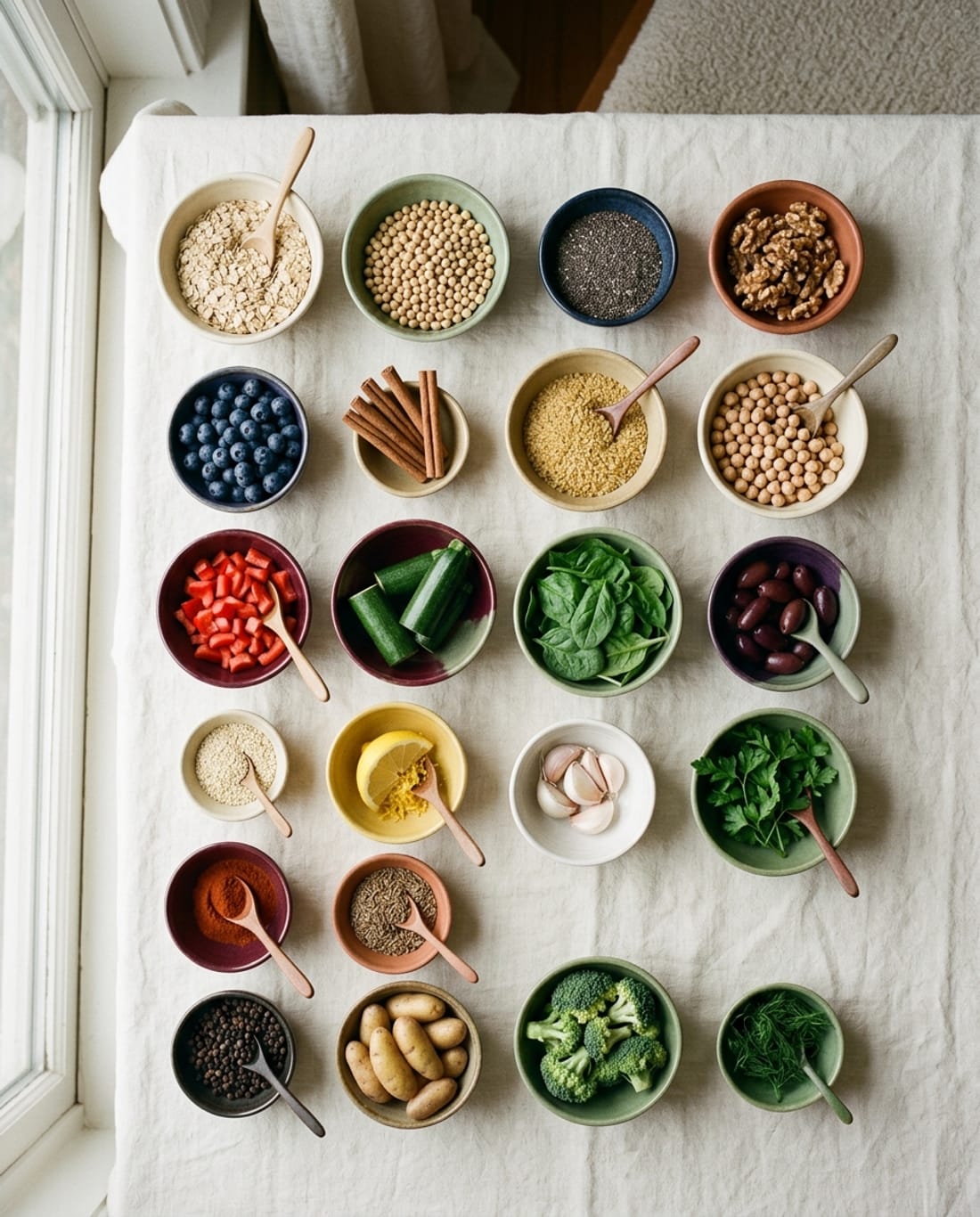
In the American Gut Project — one of the largest citizen-science microbiome projects, with over 10,000 participants — people who ate 30 or more different plants a week had a more diverse gut microbiota than those who ate 10 or fewer [5]. That’s an observation, not proof of cause and effect.
More recent randomized data points the same way. In the 2024 BIOME study, adding a daily blend of more than 30 plant ingredients for 6 weeks changed the microbiome composition in healthy adults [6]. The study was conducted jointly with the company that makes the blend, and what that change means for long-term health is still being studied.
So instead of: “I should eat blueberries because blueberries are anti-inflammatory,” the better question is: “How many different plants can I give my body this week?”
Putting the mechanisms together
The four pathways meet on one plate
| What we eat | What happens |
|---|---|
| Fiber | microbiota → SCFAs |
| Omega-3 | lipid mediators → resolution |
| Polyphenols | signaling pathways → oxidative stress and inflammation |
| Diversity | different substrates → different microbial functions |
These chains don’t exist in separate boxes. They stack on top of the same eating pattern.
A bowl of lentils, tomatoes, leafy greens, olive oil, walnuts, and whole-grain bread doesn’t contain one “magic” molecule. It contains fiber, phytochemicals, unsaturated fats, minerals, and vitamins, all acting at once. That’s why it makes more sense to talk about an eating pattern than a list of individual foods.
⚠️ An important boundary
The mechanism is interesting. But it isn’t proof of treatment.
In cancer, nutrition matters for maintaining nutritional status, muscle mass, physical function, and quality of life — but it doesn’t replace oncological treatment. ESPEN places timely assessment and treatment of malnutrition at the center of nutritional care in cancer [1].
With weight loss, cachexia, mucositis, neutropenia, diarrhea, or difficulty swallowing, the priorities shift. Sometimes the most important thing isn’t adding more broccoli and chia, but simply making sure the person can eat at all and get enough energy and protein. That’s why every recipe below comes with an adapted version too.
In practice
The “anti-inflammatory” plate
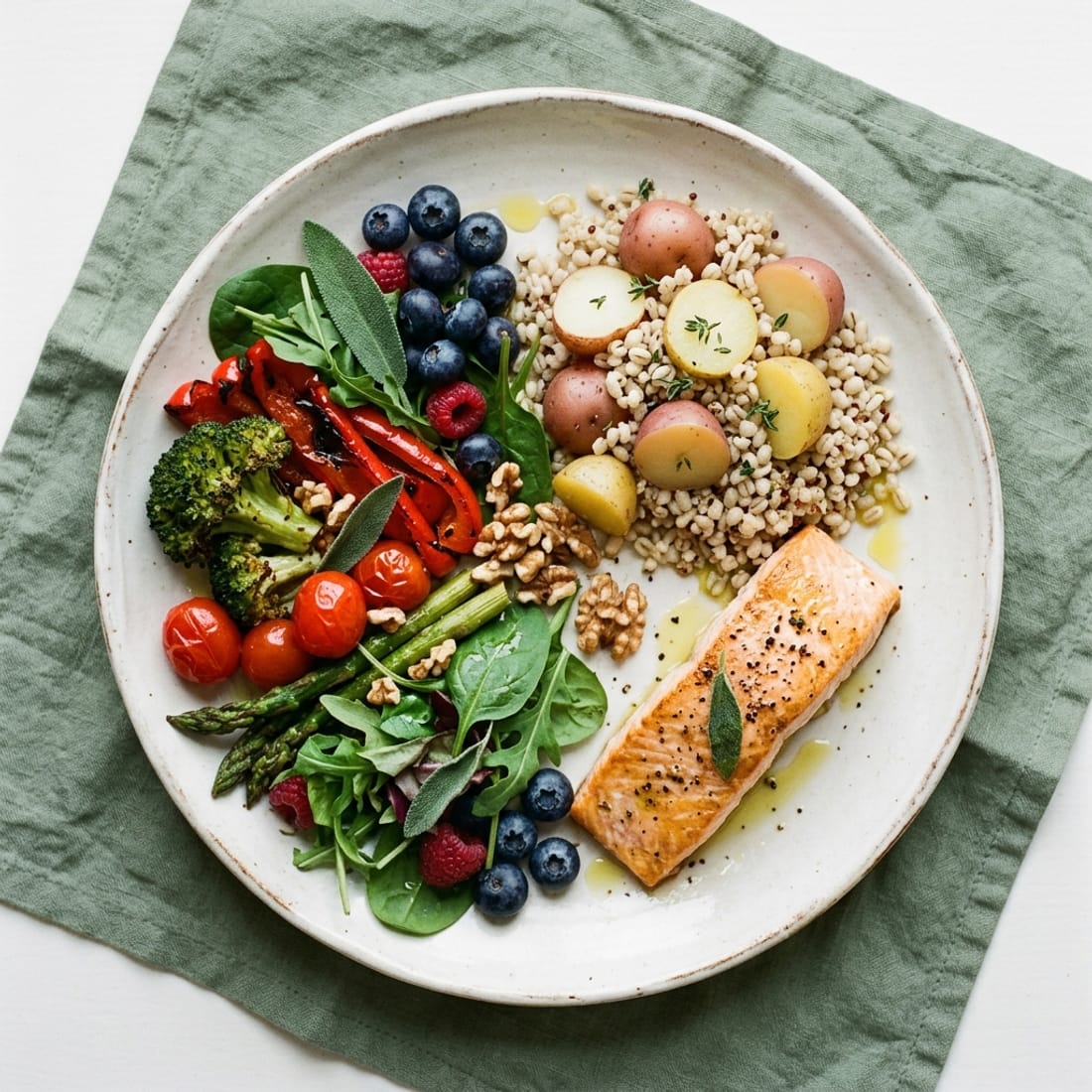
- ½ vegetables and fruit
- ¼ whole grains, potatoes, or another carbohydrate source
- ¼ protein
- + a source of unsaturated fat
This is a guide for people without active eating difficulties, not a rule for every patient.
Okay, but what do I actually cook? One day, three recipes
I understand all of this so far. But what does it mean for me? What do I cook for myself or for someone I’m caring for? Here’s one completely realistic day — breakfast, lunch, and dinner.
Breakfast: oat bowl with soy milk, chia, walnuts, and fruit
Honestly, this is one of my favorite breakfasts — I make it almost every day. Sometimes “anti-inflammatory eating” doesn’t look like a complicated recipe with 17 ingredients. It looks like a bowl of oats.

🥣 Ingredients
- 50 g oats (fine or rolled)
- 200 ml unsweetened soy milk
- 1 tbsp (≈12 g) chia
- 15 g walnuts — a small handful, coarsely chopped
- 1 medium piece of fruit — for example 100 g blueberries, 1 small apple, 1 pear, or 1 kiwi + a few strawberries
- optional: ½ tsp cinnamon, vanilla
Option 1: overnight cold bowl
- In a bowl or jar, mix the oats, soy milk, and chia. Stir well.
- Cover and refrigerate for at least 2–3 hours, or ideally overnight.
- In the morning, add the fruit, walnuts, and cinnamon. If the mixture has become too thick, add a little more milk.
Option 2: warm oatmeal
- Heat the soy milk.
- Add the oats and simmer on low heat for about 5 minutes.
- Add the chia and stir.
- Transfer to a bowl and add the fruit and walnuts.
You can also add the apple or pear during cooking — it softens and turns naturally sweeter without added sugar.
🌱 Optional: homemade soy milk
Ingredients: 100 g dry soybeans, water for soaking, about 1–1.2 l water for blending, vanilla if you like. Makes about 1 liter — enough for 5 breakfasts.
- Soak the soybeans in cold water for 8–12 hours. The beans will swell considerably.
- Rinse well and discard the soaking water.
- Blend with 1–1.2 l water until smooth.
- Strain through a fine sieve or a nut-milk bag, squeezing out the pulp well.
- Boil the liquid: bring to a boil and let it simmer for 15–20 minutes, stirring. This step is mandatory — raw soy contains trypsin inhibitors that are only deactivated with sufficient heat.
Cool and store in the fridge for up to 3 days.
🔬 What are you actually getting?
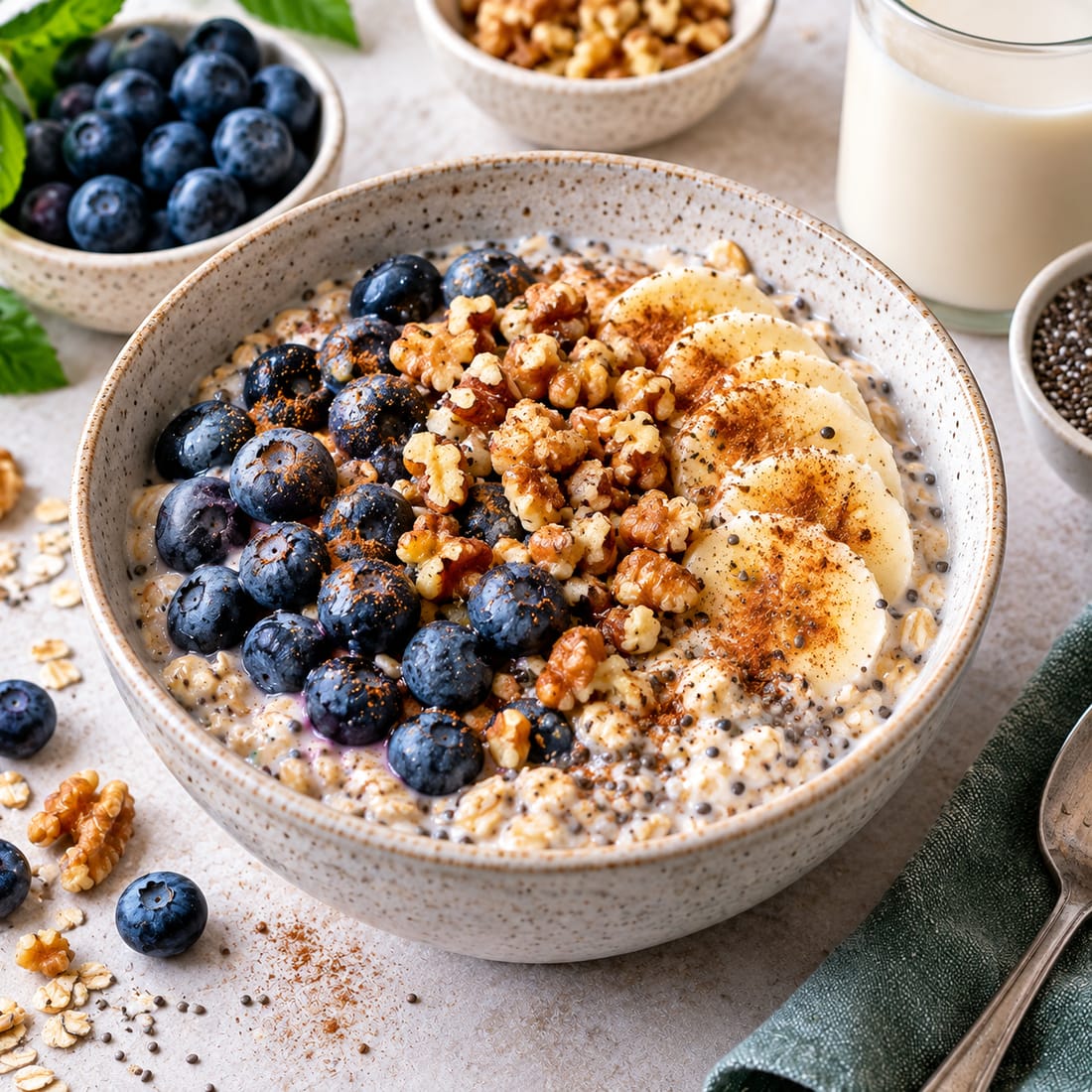
Oats → beta-glucans. Oats are rich in beta-glucans — soluble fiber the microbiota ferments. So an ordinary bowl of oats becomes part of the fiber → microbiota → SCFA chain. Oat beta-glucans also have an officially recognized role in maintaining normal LDL-cholesterol levels at an intake of around 3 g a day [7]; 50 g of oats provides about 2 g.
Soy → plant protein + isoflavones. Isoflavones are a group of polyphenols that interact with various cell signaling pathways. But the same rule applies: the presence of a bioactive molecule ≠ a proven anti-tumor effect from that particular breakfast. The goal isn’t to turn soy into an “anti-cancer food,” but to include a solid plant food within a varied eating pattern.
Chia → fiber + ALA. The small amount of chia adds fiber, a plant-based omega-3 fatty acid (alpha-linolenic acid, ALA), minerals, and a little protein. Important: the body converts ALA into EPA and DHA, but only to a limited extent. That’s why chia and flaxseed aren’t equivalent to fatty fish.
Walnuts → unsaturated fats + polyphenols. But their role is also much simpler: they make the breakfast filling and tasty. An eating pattern that’s theoretically perfect but that nobody wants to eat has no chance of becoming a real eating pattern.
Fruit → diversity. Here you can literally swap the recipe with the season: blueberries bring anthocyanins, apple brings flavonoids and pectin, pear brings fiber and other polyphenols, kiwi and strawberries bring vitamin C. There’s no need to pick “the healthiest” fruit. Eat different plants instead of chasing one perfect food.
📊 Nutritional value
Approximate, per serving (with 200 ml soy milk, 50 g oats, 12 g chia, 15 g walnuts, and 100 g blueberries):
| Nutritional value | Per serving |
|---|---|
| Energy | ~470 kcal |
| Protein | ~17 g |
| Carbohydrates | ~51 g |
| Fat | ~21 g |
| Fiber | ~12 g |
Values are approximate and depend on the specific products used.
🩺 If right now…
choose the warm version and cook it a little longer, so it’s softer. Grind the walnuts or replace them with 1 tsp nut butter. Avoid acidic fruit (kiwi, strawberries) — use a ripe pear or baked apple instead.
the goal is more energy in a smaller volume. Add 1 tbsp nut or peanut butter and/or 2–3 tbsp Greek yogurt. If the whole bowl is too much, split it into two smaller meals.
cinnamon and vanilla often help when food tastes “bland” or has a metallic edge.
❓ Is soy safe with breast cancer?
This is one of the most common questions we get — and the concern is understandable, since isoflavones structurally resemble estrogen.
Human data, though, don’t support the worry about soy foods. In a study of over 5,000 women with breast cancer in Shanghai, higher soy food intake was associated with a lower risk of recurrence and death — including in women taking tamoxifen [8]. A pooled analysis of cohorts from the US and China with over 9,500 women likewise found no increased risk, but rather a lower risk of recurrence [9].
The distinction is between food and supplement. Concentrated isoflavone supplements are a separate matter and shouldn’t be taken without consulting your oncologist. A cup of soy milk a day falls within ordinary dietary intake.
Lunch: Mediterranean bowl with roasted vegetables, chickpeas, and tahini dressing
This is one of those dishes that looks a little too healthy — until you try the dressing. And the best part: no need to hunt down 14 exotic ingredients at three different stores.
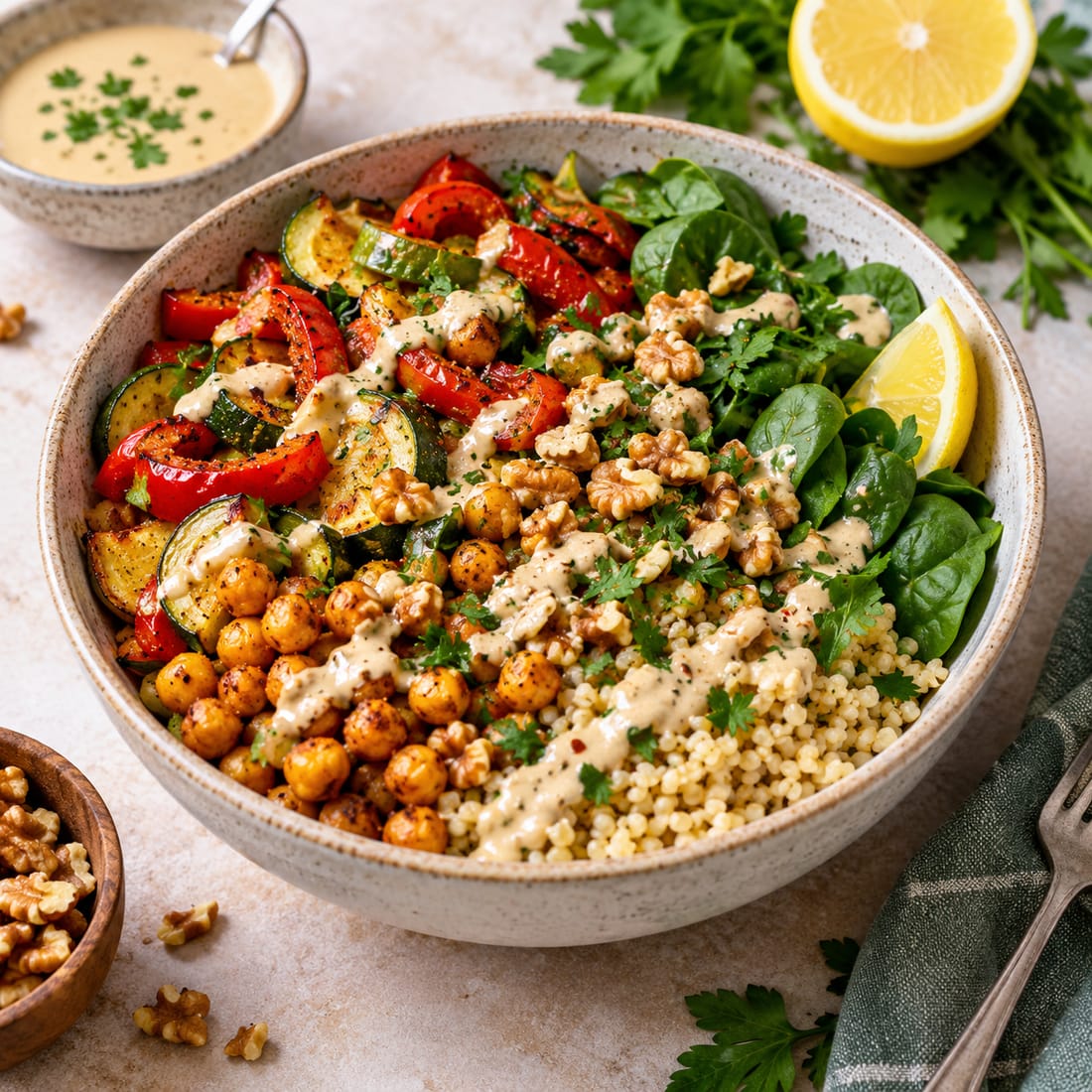
- 1½ cups (≈270 g) cooked bulgur (from about ½ cup raw)
- 1½ cups (≈250 g) cooked chickpeas, or 1 can, well rinsed and drained
- 2 medium red bell peppers
- 2 medium zucchini
- 4 handfuls of fresh spinach
- ¼ cup (≈30 g) walnuts, coarsely chopped
- 2 tbsp olive oil (1 for the vegetables, 1 for the chickpeas)
- 1 tsp smoked or sweet paprika
- ½ tsp cumin
- salt and black pepper to taste
- 2 tbsp tahini
- juice of ½ a lemon
- 1 small garlic clove, pressed
- 2–3 tbsp water
- a pinch of salt
- optional: a little parsley
Method
- Cook the bulgur according to the package instructions.
- Roast the vegetables. Cut the peppers and zucchini into larger pieces. Toss with 1 tbsp olive oil, the paprika, cumin, salt, and pepper. Spread on a baking tray and roast at 200°C for 20–25 minutes, until softened and lightly caramelized.
- Add the chickpeas. Pat them dry, toss with the remaining 1 tbsp olive oil and a pinch of salt, and add them to the tray for the last 10–15 minutes. They’ll roast lightly and turn crisp on the outside.
- Make the dressing. Stir together the tahini, lemon juice, garlic, and salt. Add the water gradually until you get a creamy but pourable sauce.
- Assemble the bowls. Divide the bulgur, vegetables, and chickpeas among 4 bowls. Add a handful of spinach, a few walnuts, and dressing to each. Finish with parsley and a bit more lemon if you like it tangier.
🔬 Why these ingredients?
Chickpeas + bulgur → fiber and plant protein. A combination of complex carbohydrates, plant protein, and plenty of fiber.
Peppers + zucchini + spinach → diversity. Different colors, different types of fiber, and different phytochemicals — with no need to buy a “superfood.”
Walnuts + olive oil + tahini → unsaturated fats. They make the dish filling, and are a good example of why “anti-inflammatory eating” doesn’t mean “eating without fat.”
Lemon + garlic + spices → flavor, not magic. They make the dish interesting without much salt, sugar, or a heavy sauce. That’s an important part of sustainable eating: a healthy dish also has to taste good.
📊 Nutritional value
Approximate, per serving (¼ of the recipe):
| Nutritional value | Per serving |
|---|---|
| Energy | ~350 kcal |
| Protein | ~13 g |
| Carbohydrates | ~40 g |
| Fat | ~18 g |
| Fiber | ~12 g |
Values are approximate. That ~12 g of fiber is about 40% of the 30 g/day fiber guideline used in cancer prevention recommendations [10]. Legumes + whole grains + vegetables + nuts — and the fiber comes naturally, no supplements needed.
🩺 If right now…
during treatment, needs are usually higher — ESPEN recommends more than 1 g of protein per kg of body weight per day [1]. ~13 g per serving is on the low side. Add 1–2 hard-boiled eggs, 50 g cheese, or 2 tbsp Greek yogurt in the dressing.
cut back on the chickpeas, peel and cook the vegetables softer, and swap the bulgur for white rice for a few days — during an episode, insoluble fiber can make symptoms worse.
blend the roasted vegetables and chickpeas with the tahini and a little broth — you’ll get a cream soup close to warm hummus. Skip the lemon and garlic if they irritate. With dysphagia, the right texture is best worked out with a speech therapist or dietitian.
sauté the spinach instead of using it raw, wash all produce thoroughly, and follow your team’s food-safety guidance.
Dinner: baked salmon with potatoes, broccoli, and lemon-herb dressing
And at the end of the day, we deserve a good dinner. It doesn’t have to look like a “diet menu.” Salmon, potatoes, broccoli, and a fresh olive oil and lemon dressing — all on one tray, ready in about half an hour.
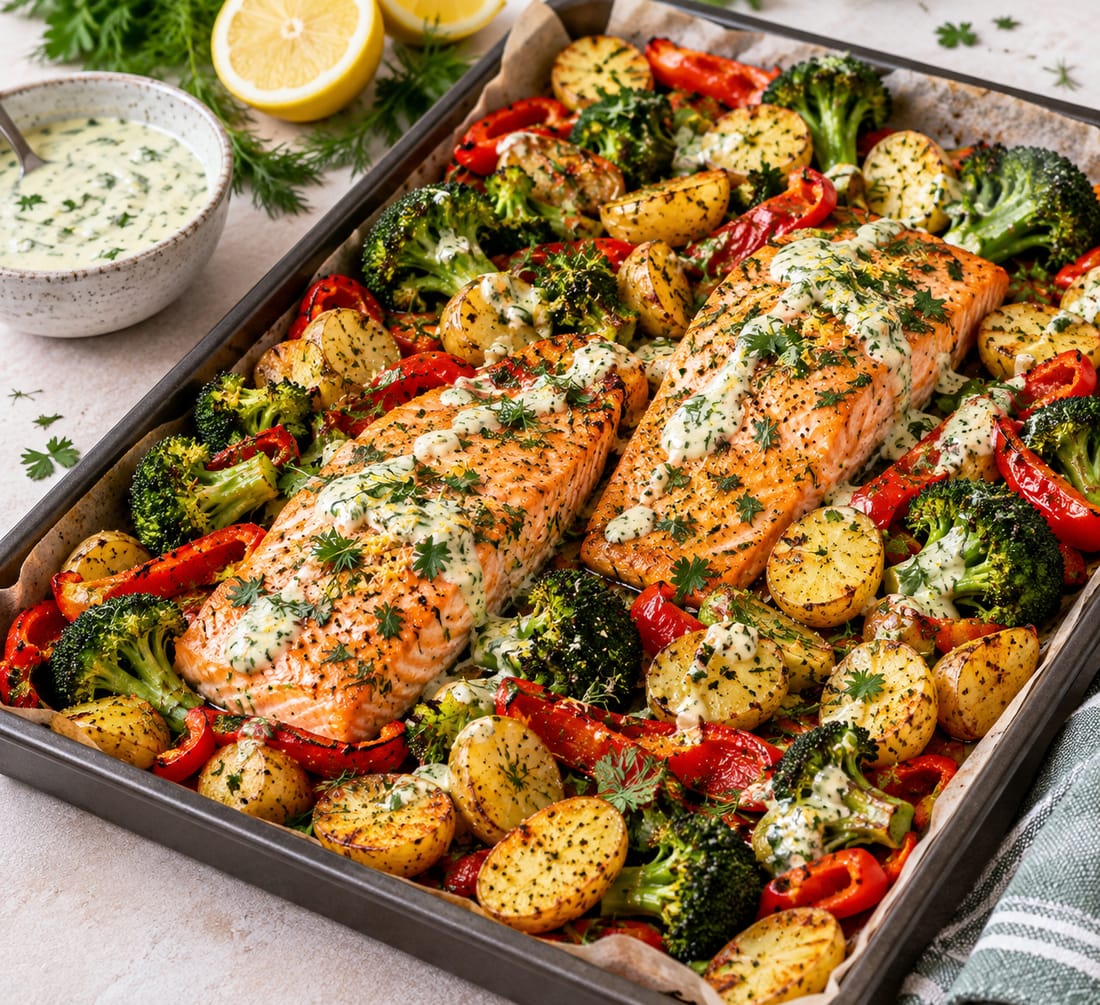
- 2 salmon fillets, about 140–160 g each
- 400 g small potatoes
- 300 g broccoli
- 1 red bell pepper
- 1½ tbsp extra virgin olive oil
- 1 tsp sweet or smoked paprika
- ½ tsp dried garlic
- salt and black pepper to taste
- ½ a lemon
- 1 tbsp extra virgin olive oil
- juice of ½ a lemon
- 1 small garlic clove, finely chopped or pressed
- 1 tbsp fresh dill or parsley
- a pinch of black pepper
- optional: 1–2 tbsp plain yogurt, chili flakes, lemon zest
Method
- Start with the potatoes. Heat the oven to 200°C. Wash the potatoes well and cut into halves or quarters. Toss with 1 tbsp olive oil, the paprika, dried garlic, salt, and pepper. Spread on a lined baking tray and roast for 15 minutes — they need more time than the rest, so they go in first.
- Add the vegetables. Cut the broccoli into small florets, cut the pepper into large pieces, add them to the tray, and drizzle with the remaining ½ tbsp olive oil. Return to the oven for 8–10 minutes. The broccoli should soften but keep some bite.
- Add the salmon. Pat the fillets dry, season with salt, pepper, and a little lemon juice. Make space in the middle of the tray, place them skin-side down, and roast for another 10–12 minutes depending on thickness. The salmon is done when it flakes easily with a fork.
- Make the dressing. While everything roasts, mix the olive oil, lemon juice, garlic, dill, and black pepper. For a creamier texture, add 1–2 tbsp yogurt. Drizzle over the salmon and vegetables right before serving.
🔬 Why this combination?
Salmon → EPA + DHA → lipid mediators. Salmon is one of the most practical dietary sources of EPA and DHA — the raw material for the mediators involved in actively resolving inflammation.
Broccoli → fiber + glucosinolates. Broccoli is a cruciferous vegetable and contains glucosinolates, which under the right conditions form sulforaphane — a compound studied for its interaction with cellular defense mechanisms. A small trick: the enzyme that converts glucosinolates into sulforaphane is destroyed by longer cooking, so some researchers suggest chopping broccoli about 30–40 minutes before cooking it.
Potatoes → carbohydrates + potassium + fiber. Potatoes often get an undeserved bad reputation. The potato itself isn’t the problem — it’s what makes the dish genuinely filling. The difference is between roasted potatoes + vegetables + salmon and fried potatoes + heavily processed meat + a sugary drink. Context matters.
Red pepper → carotenoids + vitamin C. The different colors on your plate aren’t just aesthetics — they mean different pigments, different bioactive compounds, and different types of fiber.
Olive oil → unsaturated fats. A core component of the Mediterranean eating pattern. And it has a very practical function too: it makes the vegetables taste good. That’s not a minor thing.
📊 Nutritional value
Approximate, per serving:
| Nutritional value | Per serving |
|---|---|
| Energy | ~680 kcal |
| Protein | ~36 g |
| Carbohydrates | ~50 g |
| Fat | ~35 g |
| Fiber | ~10 g |
| Omega-3 (EPA + DHA) | ~2–3 g* |
* The amount of EPA + DHA varies significantly depending on the type and origin of the salmon. All values are approximate and depend on the specific products, portions, and preparation method.
🩺 If right now…
food at room temperature smells less than hot food — let the salmon cool a little and start with a small portion. See also our article on nausea during chemotherapy.
make mashed potatoes instead of roasted, cook the broccoli softer, and swap the dressing for yogurt and dill, without the lemon and garlic.
this dinner is a solid base — about 36 g of protein and close to 700 kcal. Don’t skip the fat in the dressing.
Challenge
How many plants are in this one day?
Count them. Across the three recipes together, there are about 22 different plants:
If you count herbs and spices as ¼ plant each (as some counting systems do), it comes out to about 18. Either way, in just one day you’ve covered more than half the path to 30 plants a week.
Try counting your own this week. Not to become perfect, but to see how easily diversity adds up when you’re not chasing it with “superfoods.”
In the end
We’re not looking for the “perfect” diet
After all the fiber, SCFAs, omega-3, polyphenols, and signaling pathways, it’s easy to lose the simplest part of the story.
Food isn’t a collection of individual molecules.
We don’t eat butyrate. We eat lentils. We don’t eat polyphenols. We eat blueberries. We don’t eat EPA and DHA. We eat salmon.
And we don’t eat a single food every day — we eat within the context of a whole eating pattern. That’s what actually matters.
More vegetables. More legumes and whole grains. A variety of fruit. Nuts and seeds. Sources of unsaturated fat. Enough protein and energy. Less heavily processed food and processed meat.
Not because any single one of these foods can magically “switch off” inflammation or cure cancer, but because the body doesn’t run on magic ingredients. It runs on networks — metabolic, immune, microbial, and cellular.
And in cancer, that means something more: not a perfect diet, but adequate nutrition, adapted to the person — to the tumor type, the treatment, the symptoms, and to what that person can actually manage to eat today.
Don’t look for one anti-inflammatory food. Look for an eating pattern you can repeat.
Because healthy eating doesn’t happen in one bowl of oats, one serving of salmon, or one “superfood.” It happens at the next meal. And the one after that.
This article is for educational purposes and doesn’t replace individual consultation with a doctor or dietitian.
Sources
- Muscaritoli M, Arends J, Bachmann P, et al. ESPEN practical guideline: Clinical Nutrition in cancer. Clin Nutr. 2021;40(5):2898–2913.
- Koh A, De Vadder F, Kovatcheva-Datchary P, Bäckhed F. From dietary fiber to host physiology: short-chain fatty acids as key bacterial metabolites. Cell. 2016;165(6):1332–1345.
- Spencer CN, McQuade JL, Gopalakrishnan V, et al. Dietary fiber and probiotics influence the gut microbiome and melanoma immunotherapy response. Science. 2021;374(6575):1632–1640.
- Serhan CN. Pro-resolving lipid mediators are leads for resolution physiology. Nature. 2014;510(7503):92–101.
- McDonald D, Hyde E, Debelius JW, et al. American Gut: an open platform for citizen science microbiome research. mSystems. 2018;3(3):e00031-18.
- Creedon AC, Bernard H, Amati F, et al. A diverse high-fibre plant-based dietary intervention improves gut microbiome composition, gut symptoms, energy and hunger in healthy adults: a randomised controlled trial (BIOME study, NCT06231706). medRxiv preprint, 2024.
- Regulation (EU) No 432/2012 on the establishment of a list of permitted health claims made on foods (oat and barley beta-glucans and maintenance of normal blood LDL-cholesterol concentrations).
- Shu XO, Zheng Y, Cai H, et al. Soy food intake and breast cancer survival. JAMA. 2009;302(22):2437–2443.
- Nechuta SJ, Caan BJ, Chen WY, et al. Soy food intake after diagnosis of breast cancer and survival: an in-depth analysis of combined evidence from cohort studies of US and Chinese women. Am J Clin Nutr. 2012;96(1):123–132.
- World Cancer Research Fund / American Institute for Cancer Research. Diet, Nutrition, Physical Activity and Cancer: a Global Perspective. Continuous Update Project Expert Report, 2018.